
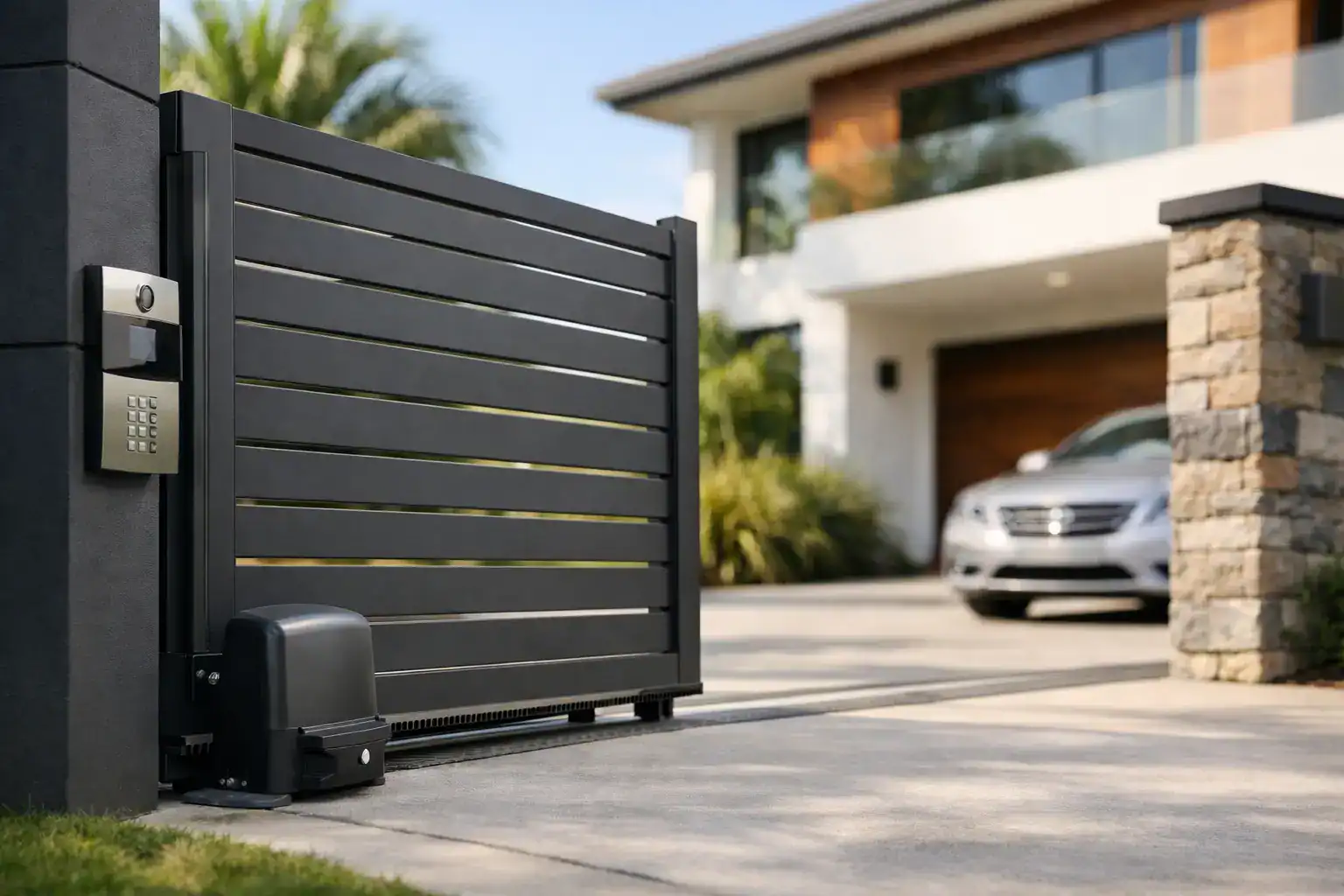
A gate should do more than open when you press a remote. It should secure the property, suit the way vehicles enter and leave, withstand Perth conditions, and look right alongside the fencing. This guide to automatic gate systems explains the decisions you should consider before installation, so you can choose a gate that works reliably for years rather than becoming another maintenance issue.
Start with the purpose of the gate
The best automatic gate system starts with a clear understanding of what it needs to do. A residential driveway gate may be primarily about privacy, security and a better street presentation. A commercial gate may need to manage frequent vehicle movements, restrict access outside trading hours, and stand up to heavier daily use.
Consider who will use the entry and how often. A family home with two cars has very different requirements from a strata complex, workshop, storage yard or commercial premises. Think about visitor access too. If deliveries, trades or clients regularly arrive at the property, an intercom, keypad or mobile-controlled access system can prevent unnecessary trips to the gate.
Privacy is another major consideration. Aluminium slat gates can create a clean, contemporary frontage while limiting views into the property. Tubular gates offer clear sightlines and a more open appearance, while still providing a strong physical boundary. The right choice should complement existing fencing, the building style and the level of security required.
Guide to automatic gate systems: sliding or swinging?
The main decision is usually between a sliding gate and a swing gate. Both can be excellent options when they are designed, installed and automated correctly. Site conditions decide which one makes the most sense.
Sliding gates
A sliding gate moves sideways along the fence line, making it a practical choice where driveway space is limited. Because it does not swing into the driveway or towards the street, it can suit shorter or sloping driveways and properties where vehicles need to park close to the entrance.
Sliding gates need sufficient room beside the opening for the gate to travel when open. That run-back area must remain clear. The ground also needs to be prepared carefully so the track, posts and motor operate consistently. For many Perth homes and commercial sites, a sliding aluminium gate provides a secure, low-maintenance solution with a streamlined look.
Cantilever sliding gates are another option for sites where a ground track is unsuitable. They are supported above ground and can be useful where debris, uneven surfaces or frequent vehicle traffic would make a traditional track less practical. They generally require more structural space and planning, but the result can be highly reliable for demanding applications.
Swing gates
Swing gates open inward on hinges, either as a single large leaf or a pair of leaves meeting in the middle. They can suit wider frontages and properties with adequate clear space behind the gate. A well-designed pair of swing gates often creates a classic, substantial entrance.
The trade-off is clearance. Vehicles must be able to stop safely without blocking the opening path, and the ground level needs to allow the leaves to move freely. Swing gates should generally open into the property, not out towards a road or footpath. On exposed sites, wind loading also needs careful consideration, particularly with solid or closely spaced infill panels.
Choose materials built for local conditions
Perth properties deal with intense sun, heat, wind, dust and, in coastal suburbs, salty air. Material quality and finish make a real difference to the long-term appearance and performance of an automatic gate.
Powder-coated aluminium is a popular choice because it is lightweight, durable and resistant to corrosion. Its lower weight can reduce the load on motors and hardware compared with heavier alternatives, while still allowing a wide range of slat, panel and tubular designs. It is particularly well suited to modern homes and properties looking for a coordinated fence and gate finish.
Steel can be appropriate for particular commercial applications or when a heavier-duty design is required. It needs the right protective coating and ongoing attention to prevent corrosion, especially near the coast. Timber can offer warmth and character, but it is heavier and generally needs more maintenance in the Perth climate.
A professional site inspection helps determine the right material, post size, gate frame and support structure. The motor is only as reliable as the gate it is moving. A gate that is poorly aligned, too heavy for its design or inadequately supported will place unnecessary strain on the automation system.
Match the motor to the gate and usage
Gate motors are not one-size-fits-all. They are selected according to gate weight, width, opening style, expected daily cycles and exposure to wind. Installing an undersized motor may appear to save money initially, but it can lead to slow operation, premature wear and avoidable repairs.
For a home driveway, a quality residential motor may be ideal where the gate opens several times a day. Commercial sites, apartment complexes and busy premises usually need a higher-duty system designed for frequent operation. The control equipment should also be positioned and protected appropriately from weather, impact and tampering.
Power supply is an early planning point. Mains-powered systems provide dependable operation where electrical access is available, while solar automation can be useful on remote sites or where trenching power is difficult. Solar systems depend on the location, sunlight exposure, gate use and battery capacity, so they need to be assessed properly rather than selected as a default.
A battery backup is worth discussing for many properties. It can allow the gate to operate during a power outage, which may be particularly valuable where access is essential for residents, staff or emergency services.
Safety features are part of the system, not extras
An automatic gate creates a moving barrier, so safety must be built into the design from the start. The gate should be installed with suitable clearances, stopping positions and safety devices to reduce the risk of contact with people, vehicles and objects.
Photo-electric safety beams are commonly used to detect an obstruction in the gate path. If a person, pet, bike or vehicle breaks the beam, the gate can stop or reverse depending on the system setup. Safety edges, obstacle detection and correctly configured force settings provide additional protection where required.
Pedestrian access deserves separate thought. People should not need to pass through an automated vehicle gate as their everyday entry point. A dedicated pedestrian gate, with a practical latch or controlled access, provides a safer and more convenient route for family members, visitors and staff.
The automation, electrical connection and safety configuration should be completed by appropriately qualified professionals. For properties with pools, the surrounding fencing and gates must also meet applicable pool safety requirements. Automatic driveway gates are not a substitute for compliant pool barriers.
Plan access controls around real life
A reliable motor is only half the experience. The access method should suit the people using the site. Remote controls remain simple and effective for households, while keypads can be useful for trades, tenants or staff who need access without carrying a remote.
Intercom systems allow residents or reception staff to screen visitors before granting entry. Video intercoms add visibility at the gate, which can be valuable for homes set back from the street and commercial properties receiving regular deliveries. Some systems can be operated through a mobile, but this should be chosen for convenience, not as a replacement for reliable physical controls and manual release options.
For commercial sites, access credentials, timed opening schedules and exit loops can help manage traffic more efficiently. A vehicle detection loop can open the gate automatically for departing vehicles while maintaining controlled entry from the street.
Installation quality protects your investment
A good-looking gate can still perform poorly if the foundations, posts, track, hinges or alignment are wrong. Proper installation begins with accurate measurements, assessment of driveway levels, underground services, drainage and the available space for the gate to travel.
The gate framework must be built for the span and infill style, then installed square and level. Motors, gear racks, rollers and hinges need accurate adjustment so the gate moves smoothly without binding. This protects the motor, reduces noise and helps avoid premature component wear.
At Topline Fencing, the focus is on matching quality gate materials and automation to the site, with professional in-house installation and practical advice throughout the project. Choose Topline for our local, end-to-end approach when a gate needs to work with new fencing, existing boundaries and the everyday demands of a Perth property.
Keep the system operating reliably
Automatic gates need occasional maintenance, even when they are made from low-maintenance materials. Keep tracks and gate travel areas free of leaves, stones, sand and rubbish. Check that remotes, keypads and safety beams are working as expected, and do not ignore scraping, jerky movement, unusual noise or a gate that stops short of its normal position.
Coastal properties may need more frequent cleaning to remove salt residue from metal surfaces and hardware. Topline offers professional servicing when a gate is heavily used, has been struck by a vehicle, or begins operating inconsistently. Addressing a small alignment or motor issue early is usually far more economical than waiting for a complete failure.
The right automatic gate should make arriving home or opening up for business feel straightforward and secure. Start with a measured site assessment from Topline. Choose materials and automation suited to the property and rely on professional workmanship to ensure the system performs as well as it looks.