Best Fencing for Front Yards in Perth Homes

A front fence does more than mark a boundary. It shapes the first impression of your home, controls how much of the property is visible from the street, and can make daily access feel more secure. The best fencing for front yards is the option that suits your block, lifestyle and home design while standing up to Perth’s heat, coastal air and strong seasonal weather.

For many Perth homeowners, the right answer comes down to a balance between privacy, security and street appeal. A tall solid fence may offer excellent screening, but it can make a small front yard feel closed in. An open tubular fence can look refined and provide clear sightlines, but it will not create the same level of privacy. Choosing well starts with being clear about what your fence needs to do.

What Should a Front Yard Fence Achieve?

Before selecting a material or profile, consider how you use the front of your property. A family home on a busy road may need a stronger visual barrier and a secure gate for children and pets. A character home with a landscaped garden may benefit from a more open design that shows off the property without compromising access control.

Security is often a priority, but height alone does not make a fence secure. The quality of the posts, fixings, gate frame and latch are all important. A professionally installed fence should be stable, aligned and designed to avoid weak points around gates or uneven ground.

Privacy is another common requirement. Slats, solid panels and carefully spaced aluminium designs can reduce direct views into your outdoor areas while still allowing airflow. This is particularly valuable on narrow Perth blocks where neighbouring homes and passing traffic sit close to the front boundary.

Finally, consider maintenance. Front fencing is always on display, so peeling paint, rust or sagging gates quickly affect the appearance of the whole property. Materials that handle Perth conditions with minimal upkeep are usually the better long-term investment.

Best Fencing for Front Yards: Material Options

There is no single best material for every home. The strongest choice depends on the level of privacy you want, the style of the house, local conditions and how much maintenance you are prepared to take on.

Aluminium slat fencing for modern privacy

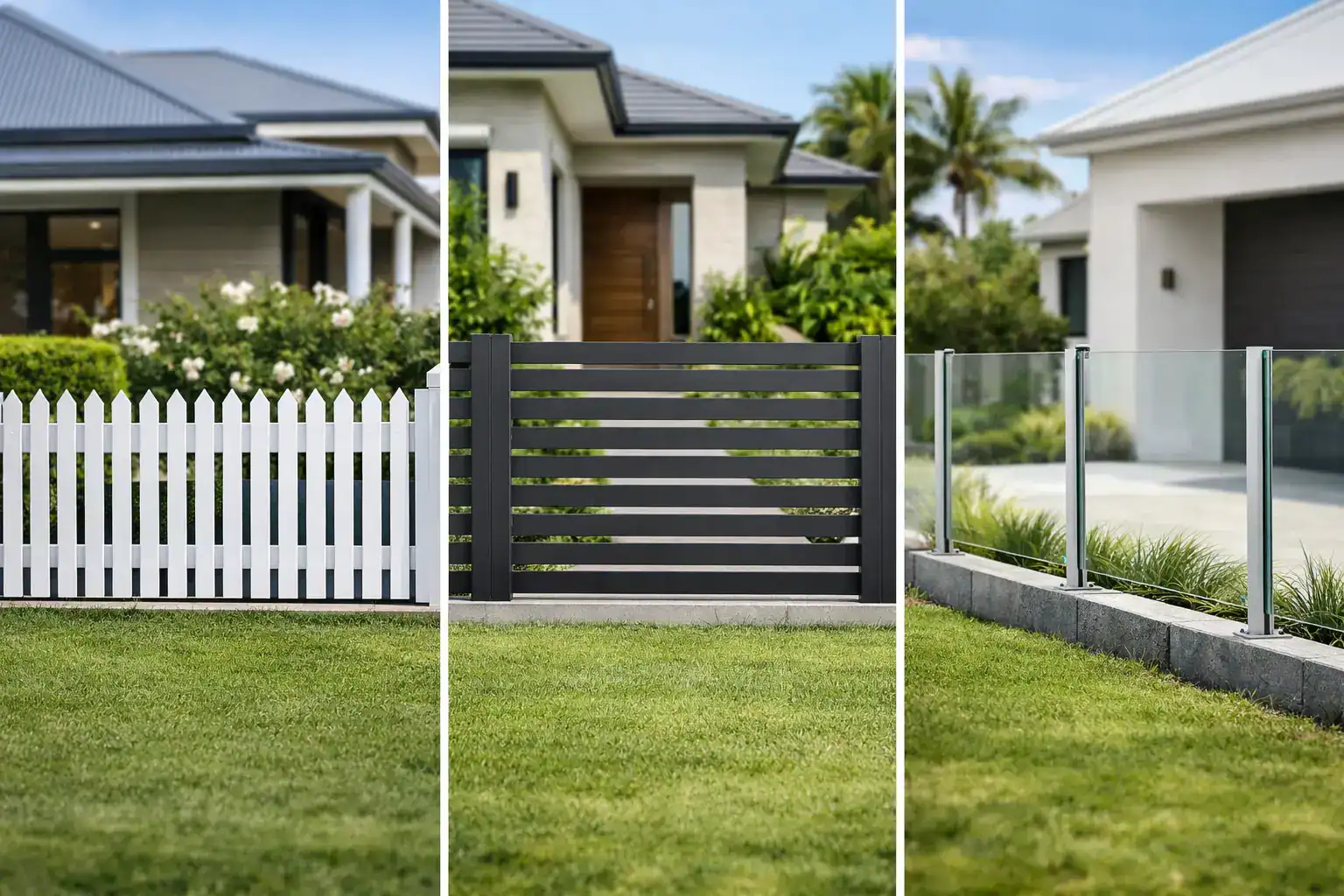
Aluminium slat fencing is one of the most versatile front fence options for Perth homes. Horizontal or vertical slats create a clean, architectural finish that works especially well with contemporary homes, renovated properties and new builds. The spacing between slats can be adjusted to provide anything from light screening to near-full privacy.

High-grade aluminium is well suited to Perth’s climate because it does not rust like untreated steel or timber fastenings. Powder-coated finishes are available in a wide range of colours, allowing the fence to complement window frames, roof colours, paving or façade materials.

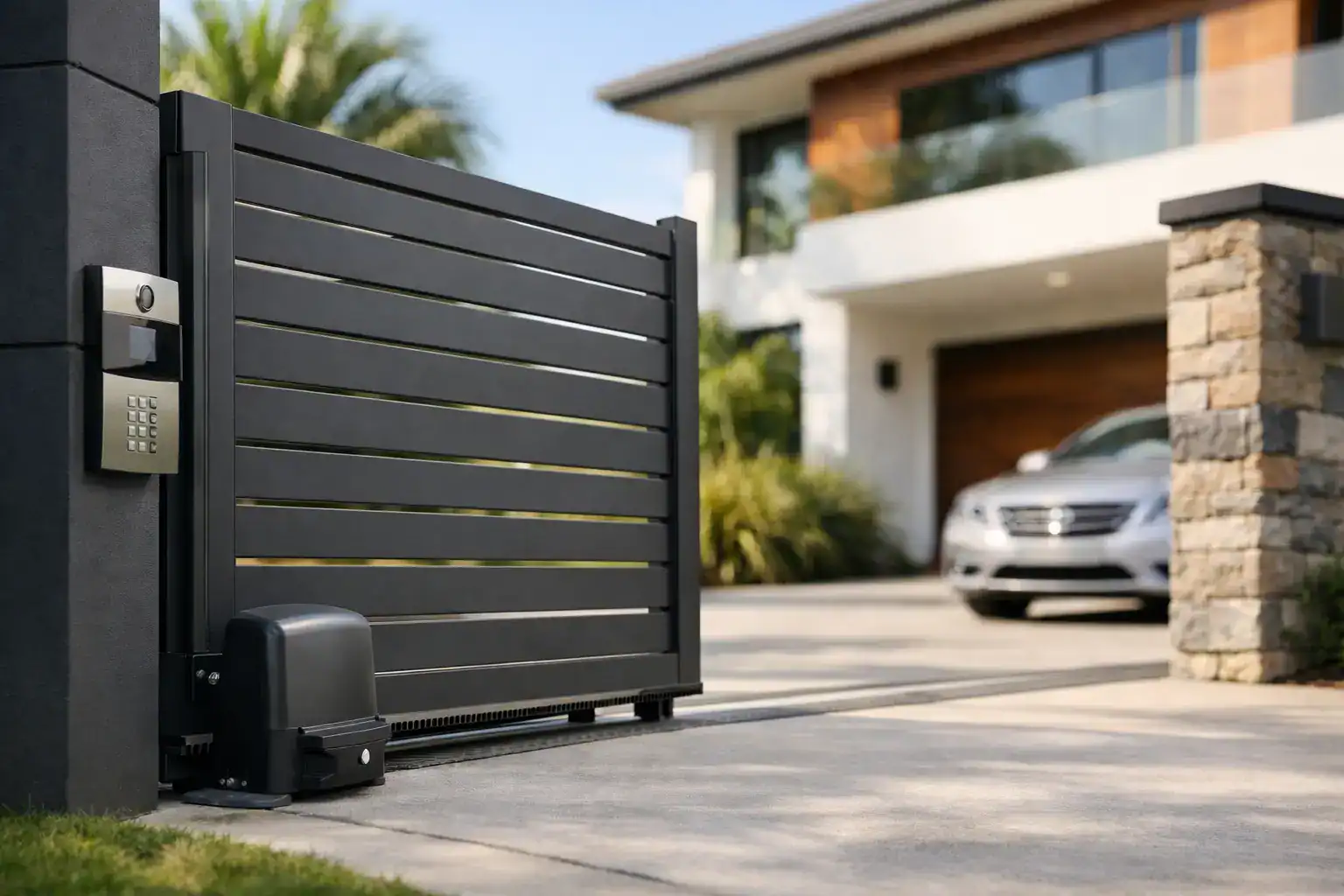
Slat fencing is particularly effective when paired with a matching pedestrian gate, driveway gate or automated sliding gate. The result is a consistent street frontage that looks deliberate rather than pieced together over time. It is generally a premium option, but its durability and low maintenance can make it good value over the life of the fence.

Aluminium tubular fencing for visibility and security

Aluminium tubular fencing is a practical choice where security and visibility is more important more than complete screening. It provides a defined front boundary without making the property feel shut off from the street. This makes it a popular option for homes with established gardens, corner blocks and properties where owners want clear views of visitors and vehicles approaching the gate.

Tubular fencing can be supplied in simple, modern styles or more decorative profiles to suit the home. It is also a dependable choice for gates, side returns and areas where a secure enclosure is needed for children or pets.

Because it is open in design, tubular fencing does not offer much privacy on its own. Some homeowners combine it with masonry pillars, low rendered walls or planted screening to create a more substantial frontage without losing its clean appearance.

Colorbond fencing for straightforward screening

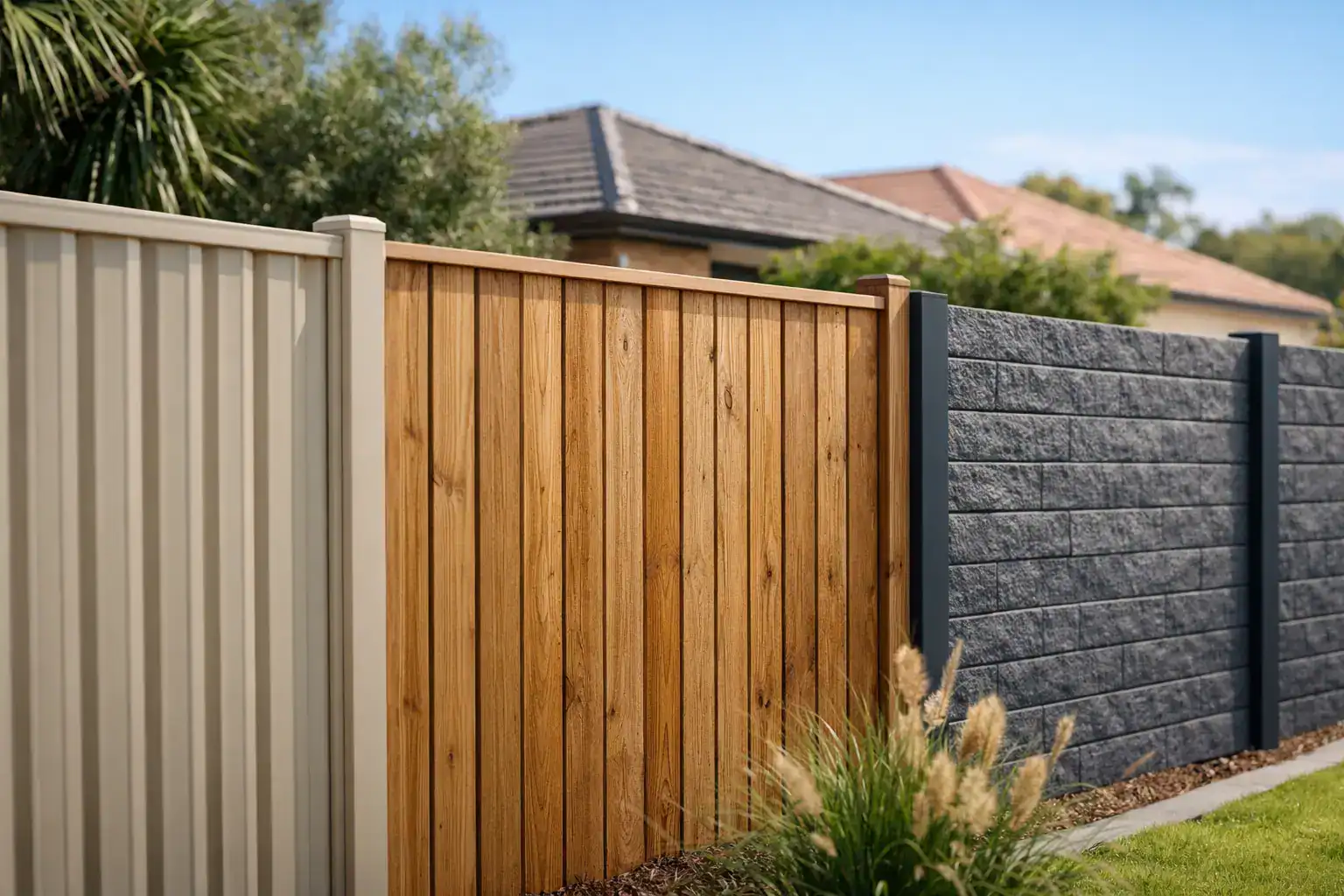
Colorbond fencing remains a familiar option for Perth properties needing durable, solid screening. It is made from pre-painted steel and is available in colours that suit a broad range of homes. For side and rear boundaries, it is often an easy decision. For front yards, it needs more consideration.

A standard Colorbond fence can look functional rather than decorative when installed across a prominent street frontage. However, it can work well for homes on busy roads, investment properties or larger sites where privacy is the main objective. Using stepped panels, complementary gates, quality capping and considered landscaping can improve the finished look substantially.

Steel fencing should be installed with appropriate attention to drainage, post depth and site conditions. In coastal suburbs, material selection and finish quality are especially important to support long-term performance.

Glass panels for low walls and feature areas

Glass fencing is not usually the main boundary fence for a front yard, but it can be a strong design feature. Frameless or semi-frameless glass panels can sit above a low masonry wall to preserve views, bring more light into a courtyard or create a refined entry area.

This option suits modern homes where visual openness is part of the design. It requires regular cleaning to keep it looking its best, particularly near the coast or on roads with dust and traffic residue. Glass should also be specified and installed correctly for its application, rather than treated as a decorative afterthought.

Match Fence Height and Design to Your Block

The ideal front fence height depends on privacy needs, sightlines, gate access and applicable local requirements. Taller fencing can improve screening and discourage easy access, but it can also block light, reduce passive surveillance and feel imposing from the street.

On sloping blocks, stepped panels or raked fencing may be needed to keep the fence line neat and avoid awkward gaps underneath. A site measure is essential here. What looks level from the footpath can have significant falls across the boundary, especially on established properties.

Corner blocks need extra care around vehicle sightlines. A fence that is too high or too solid near a driveway can make it harder to see pedestrians, cyclists and approaching traffic. The same applies where a pedestrian gate opens close to a crossover.

If the front fence connects to a pool area, do not assume a standard boundary design will meet pool barrier requirements. Pool fencing is compliance-driven and needs to be assessed separately, including gate operation, climbable objects, heights and clearances.

Do Not Treat the Gate as an Add-On

A well-built front fence can be let down by a poorly planned gate. Your pedestrian gate and driveway gate should match the fence profile, but they also need to work reliably every day. Think about bin access, deliveries, visitor entry, vehicle turning space and whether children or pets need a fully enclosed front yard.

Swing gates can suit properties with adequate internal clearance, while sliding gates are often better where driveway space is limited or the block slopes towards the home. Automation adds convenience and can improve security, but it should be designed around safe operation, durable hardware and reliable access during a power outage.

A local fencing contractor can assess these details before fabrication. This avoids the common problem of ordering an attractive fence design that does not allow enough room for a gate to operate properly.

Choose Colours That Work With the Whole Exterior

Black, Monument and other dark powder-coated finishes remain popular because they create contrast and suit many Perth homes. Lighter tones can make a small frontage feel more open, while timber-look aluminium slats can add warmth without the maintenance demands of natural timber.

The best colour is rarely chosen in isolation. Look at the roof, garage door, window frames, brickwork, paving and retaining walls. A fence should tie these elements together. If you are unsure, a simple sample comparison outside in natural light will give a more accurate result than choosing from a screen or brochure.

Professional Installation Makes the Difference

Even premium materials will underperform if posts are poorly set, panels are uneven or gates are not correctly aligned. Front fencing needs precise measurement, sound footings and careful finishing because every detail is visible from the street.

At Topline Fencing, the process starts with understanding the property and the outcome you want, then recommending a practical design based on local conditions, access and budget. Topline’s installation team can manage the project from site inspection and custom fabrication through to installation, with workmanship that is built to last.

The right front fence should make your property feel more private, secure and complete every time you arrive home. Call Topline now to arrange a professional site measure before making a final decision, and you will have the information needed to choose a design that works as well as it looks.

Glass Balustrade Installation Guide for Perth

A glass balustrade can make a Perth balcony, stairway or elevated deck feel larger without giving up the safety barrier it needs. This glass balustrade installation guide explains the decisions you should consdier before fitting begins, including how the structure is assessed, which fixing system suits the site, and why professional measurement is probably the way to go.

The finished result should look clean and simple. The work behind it is anything but casual. Glass is heavy, fixing points carry significant loads, and even a small measuring error can affect alignment, drainage or compliance. A properly planned installation protects the people using the space while preserving the clear views that make glass such a popular choice.

Start with the structure, not the glass

The first question is not which glass panel looks best. It is whether the supporting structure can safely carry the balustrade system and the loads it will receive in normal use. On a new build, this can be addressed in the design stage. On an existing home or commercial property, the deck edge, slab, stairs, balcony frame or wall must be inspected before components are ordered.

Concrete, steel, timber and masonry all require different fixing methods. A concrete slab may suit core-drilled spigots or a base channel, provided the slab has sufficient depth and sound condition. A steel frame can often accommodate purpose-designed brackets or side-mounted posts. Timber decks need particular care because the visible decking boards are rarely the structural element that should carry a balustrade load. Fixings generally need to connect to substantial framing below.

This is where local experience makes a practical difference. Perth properties can include older brick homes, coastal locations exposed to salt air, lightweight upper-storey decks and outdoor areas affected by strong sun and wind. An installer should assess the actual site rather than assume a standard detail will work everywhere.

Choose a glass balustrade system that suits the site

Frameless glass balustrades use toughened safety glass held by discreet spigots, clamps or a continuous base channel. They create the clearest possible finish and are well suited to entertaining areas, balconies and feature staircases where the view is central to the design.

Semi-frameless systems use posts and rails with glass infill panels. They are still modern and open in appearance, while offering a different look and often more flexibility around certain fixing conditions. The right choice depends on the design, budget, exposure and structure beneath it. Frameless is not automatically the better system if the site would require extensive structural work to support it correctly.

Glass selection also depends on location and use. Toughened safety glass is commonly used in balustrade applications, while laminated safety glass may be required or preferred in particular circumstances. Laminated glass is designed to remain held together if broken, which can be relevant in elevated areas and where fall protection is especially critical. The final specification should be confirmed against the applicable Australian Standards, the National Construction Code and the project requirements.

Hardware is as important as glass. Marine-grade stainless steel fittings are a sensible choice for many Perth outdoor installations, particularly near the coast, but they still need appropriate care. Powder-coated aluminium components can also be an excellent option where the system is designed for the application and colour matching is a priority. Quality fittings, correct isolation between dissimilar metals and reliable drainage details all contribute to long-term performance.

Glass balustrade installation guide: measure and design precisely

Glass panels cannot be trimmed on site once they have been toughened. That makes site measurement one of the most important stages in the whole project. A professional measure accounts for more than the overall length of a balcony or deck.

The installer needs to check changes in level, out-of-square corners, posts or walls that lean slightly, surface finishes, expansion gaps and the position of every fixing point. They also allow for the required panel gaps, handrails where needed, gate clearances if the balustrade forms part of a pool area, and practical access for lifting panels into place.

A detailed set-out turns those measurements into a panel layout. The aim is balanced spacing, neat end conditions and glass sizes that can be safely handled and installed. On a long run, a few millimetres lost at each gap can create a noticeable problem at the final panel if the layout has not been calculated properly.

At this stage, it is also worth considering how the balustrade will work with the rest of the outdoor area. Will it meet a rendered wall, aluminium privacy screening or a gate? Is there a step down near the edge? Does the deck need a handrail for usability or compliance? Planning those details early avoids improvised fixes later.

Prepare the site before installation day

Once the system is approved and fabricated, the work area needs to be ready for installation. Clear furniture, pots and loose items from the immediate area. Ensure installers can safely move glass panels from the delivery point to the work zone, especially where there are narrow side paths, internal stairs or limited access through the home.

The substrate should be complete and stable before glass work begins. Ideally, final tiles, pavers, decking or waterproofed surfaces are already in place so that fixing heights and finished levels are accurate. Installing a balustrade before surrounding finishes are resolved can leave awkward gaps or create a risk of water sitting around base fixings.

For balcony and upper-level work, access and safety controls are essential. Installers may need temporary edge protection, lifting equipment or additional crew members depending on panel size and site conditions. This is not a job for a single person attempting to manoeuvre a large pane of glass near an open edge.

Fit the base system and set every panel

Installation usually begins by marking the approved set-out on the structure. Spigot positions, channel lines or post locations are checked against the drawings and measured again before drilling starts. The team then installs the fixings using the specified anchors, bolts or chemical anchoring system for the substrate.

Accuracy is critical here. Base channels must be straight and properly secured. Spigots must be correctly aligned and set to the required height. Side-mounted brackets need sound structural connections and adequate edge distances. If a fixing point is questionable, the right response is to stop and resolve it, not to force the original plan onto an unsuitable surface.

The glass panels are then lifted into position with suitable handling equipment and protective packers. Each panel is levelled, plumbed and spaced consistently before clamps, wedges or channel mechanisms are tightened to the manufacturer’s requirements. Glass must never be allowed to contact hard metal or concrete directly. Correct gaskets, packers and isolation components protect the panel edges and allow the system to perform as designed.

Where a handrail is part of the design, it is fitted after the glass is accurately set. A handrail can provide additional support, improve usability and satisfy requirements for particular applications. The need for one is determined by the system, height, location and applicable compliance rules, not simply by personal preference.

Check compliance before calling the job complete

A glass balustrade is a safety barrier, so the final inspection is as important as the installation itself. The installer should check panel alignment, fixing tightness, edge protection, handrail connections and any required gaps or heights. They should also confirm there are no climbable features or openings that create an avoidable safety issue in the specific application.

Requirements differ between a residential staircase, a first-floor balcony, a commercial walkway and a pool area. Pool barrier rules are particularly specific, and a balustrade beside a pool may need to meet additional fencing requirements. Do not assume that a glass barrier that looks right is automatically compliant. The relevant standards, local requirements and the exact site layout need to be considered together.

For commercial projects, engineering documentation, access considerations and higher pedestrian loads may also affect the selected system. For residential work, the main focus is often a safe, attractive result that integrates neatly with the home. Both require careful design and professional workmanship.

Care for glass and hardware after fitting

Glass balustrades are relatively low maintenance, but they are not maintenance-free. Rinse away dust, salt residue and garden debris regularly, then clean the glass with a suitable non-abrasive product and soft cloth. Avoid harsh scouring pads around stainless steel fittings.

In coastal Perth suburbs, more frequent washing is worthwhile because airborne salt can build up on hardware. Check fittings periodically for movement, staining or damage, particularly after severe weather or if the barrier is in a high-traffic commercial setting. Any loose fitting, chipped glass edge or damaged component should be assessed promptly rather than left to worsen.

A well-installed glass balustrade should feel solid, look effortless and keep doing its job for years. For a new deck, balcony upgrade or commercial exterior, Call Topline today for a site inspection and precise custom measure to give you the confidence that the finished barrier will be designed for the structure, the setting and customised to you.

How Automatic Gates Improve Security at Home

A driveway is often the easiest path onto a property. When it is open, anyone can walk or drive in without being challenged. Automatic gates improve security because they create a controlled entry point that puts the property owner back in charge of who enters, when they enter, and how access is managed.

For Perth homeowners, landlords and commercial property operators, an automatic gate is more than a convenient way to avoid getting out of the car. It is a visible security measure that can deter opportunistic intruders, protect vehicles and equipment, and make the boundary of your property clear. When it is designed properly and installed by an experienced local team like Topline, it can also improve the appearance and everyday function of the frontage.

How Automatic Gates Improve Security at the Boundary

A front fence without a gate still defines a boundary, but it may leave the driveway wide open. An automatic sliding or swing gate closes that gap. It creates a physical barrier between the street and the areas where cars, tools, deliveries, children and family members are most likely to be.

This changes the effort required to gain unauthorised access. A person cannot simply turn into the driveway, walk to a side door or inspect vehicles parked near the house. They must first overcome a locked, highly visible structure. Most opportunistic offenders look for quick and easy access, so a quality gate can make your property a less attractive target.

The deterrent effect is especially valuable for homes with open frontages, corner blocks and properties where the garage, carport or workshop is easily seen from the road. For commercial sites, a secure gate helps restrict access to loading areas, storage yards, staff parking and equipment after hours.

Security works best as a system rather than a single product. An automatic gate can be paired with boundary fencing, pedestrian gates, intercoms, lighting and cameras to create a more secure perimeter. The gate controls the main vehicle entry, while the surrounding fence helps prevent people from simply walking around it.

Controlled Access Without the Daily Hassle

The practical advantage of automation is that you are more likely to keep the gate closed. A manual gate may be left open because opening and closing it is inconvenient, particularly during rain, on busy mornings or when returning home late. An automated system makes securing the driveway as simple as using a remote, keypad, intercom or mobile-connected controller.

A gate only provides security when it is shut and functioning correctly. With an automatic gate, residents can enter and leave without stepping onto the verge or roadside, while business operators can manage access without needing someone stationed at the entrance.

Different access options suit different properties. A family home may only need remotes and a pedestrian keypad. A larger residence, strata complex or business premises may benefit from an intercom that lets occupants confirm visitors before opening the gate. Properties with frequent deliveries or contractors may need access codes that can be changed when required.

There is no single best setup. The right system depends on how many people need access, whether the site has regular visitors, the position of the gate, and the level of security needed outside business hours. A site inspection is useful because it identifies how the gate will operate in real conditions, not just how it looks on a plan.

Keeping visitors where they should be

Automatic gates give you a clear point of contact for visitors. Instead of people walking directly to the front door or around the side of a building, they stop at the entrance and request access. This is valuable for households with children or pets, as well as businesses that need to separate public areas from operational spaces.

It also helps with privacy. Aluminium slat gates can limit direct views into a driveway or front yard while still providing a strong, modern finish. Tubular gate designs offer a more open appearance where visibility is preferred, such as commercial premises or driveways requiring clear sightlines.

Protecting Vehicles, Equipment and Outdoor Areas

Vehicles parked in a driveway are often exposed to theft, vandalism and unwanted attention. An automatic gate adds a layer of protection before anyone reaches the vehicle. It does not replace sensible precautions such as locking cars and removing valuables, but it reduces easy access from the street.

For tradespeople and business owners, this can be particularly worthwhile. Tools stored in a ute, trailer, garage forecourt or storage area can be expensive to replace and disruptive to lose. Securing the vehicle entry point makes it harder for someone to enter, load items and leave unnoticed.

Automatic gates can also protect areas that are not visible from inside the home or office. Rear accessways, side driveways and storage yards are common weak points. A properly specified sliding gate may be the better choice for a long or busy driveway, while a swing gate can suit a property with adequate clearance and a more traditional frontage.

The choice should be based on the site rather than appearance alone. Sliding gates are often practical where the driveway slopes or space behind the gate is limited. Swing gates require room to open safely and should not swing across a footpath or public area. Professional measurement helps ensure the gate has the right clearance, track arrangement and motor capacity for reliable operation.

A Stronger Visual Deterrent

Security is partly about prevention. A well-built automatic gate signals that the property is maintained, occupied and protected. It tells potential intruders that access will not be simple and that the owner has taken care to secure the boundary.

That does not mean every gate needs to look industrial. Perth homes often benefit from custom aluminium slat gates that complement the house, existing fencing and landscaping. They can provide privacy and security without making the frontage feel closed off. Commercial properties may require a more functional tubular steel or aluminium design, built around access width, visibility and daily traffic.

Consider material type and quality especially in Perth’s conditions. Gates are exposed to strong sun, wind, rain and coastal air in many suburbs. Premium aluminium is a popular choice because it is durable, low maintenance and resistant to corrosion. Steel can also be appropriate for particular commercial applications, provided it is correctly finished and maintained.

A gate that sticks, sags or fails to latch is not delivering the security you paid for. The frame, posts, hinges or track, motor and locking hardware must all work together. This is why professional workmanship is as important as the gate style itself.

Safety Must Be Designed Into the System

A secure gate must also be safe for residents, visitors and vehicles. Automated gates have moving parts and should be installed with suitable safety features, including obstruction detection and controls positioned where users have clear visibility. The gate must be correctly aligned and set up to avoid unnecessary strain on the motor or unsafe movement.

For homes with children, it is sensible to consider where remotes, keypads and manual release points are located. Pedestrian access should be planned separately so people are not tempted to walk through the vehicle gate opening. On commercial sites, clear procedures for staff and contractors can prevent gates being left open or used incorrectly.

Power outages are another consideration. Most automatic systems include a manual release mechanism, but property owners need to know how to use it. Depending on the site and security requirements, backup power options may also be worth discussing. A good installer will explain the operational details before handover rather than leaving you to work them out later.

Maintenance protects long-term performance

Automatic gates need periodic checks to remain dependable. Tracks should be kept clear of leaves, sand and debris. Moving components, safety devices, remotes and access controls should be inspected, and any unusual noise or slow operation should be addressed early.

Regular maintenance is not just about convenience. A gate that does not close fully, reverses unexpectedly or has a damaged latch can create a security gap. Prompt repairs protect the system, extend its service life and help avoid a small issue becoming a costly replacement.

Choosing an Automatic Gate for Your Perth Property

The best automatic gate is one that suits the way your property operates every day. At Topline, we consider the width and slope of the driveway, available side room, traffic volume, privacy requirements, desired access controls and the style of the existing fence. It is also worth thinking ahead. A gate that works for one car today may need to accommodate trailers, service vehicles or additional residents later.

Topline Fencing provides custom automatic gate solutions backed by local site knowledge, quality materials and professional in-house installation. The focus should always be on a gate that looks right, operates reliably and provides genuine protection at the point where your property is most exposed.

A secure entrance should not make daily life harder. With the right design, access system and professional installation, an automatic gate gives you greater control each time you leave, return home or close up for the night.

What Fence Material Lasts Longest in Perth?

A fence can look excellent on installation day and still become a costly problem a few years later. Perth’s strong UV exposure, dry heat, coastal salt air and winter rain put every component under pressure. So, what fence material lasts longest? For most Perth homes and commercial properties, quality powder-coated aluminium is the strongest long-term choice because it will not rust, resists corrosion and requires very little ongoing maintenance.

That does not make aluminium the automatic answer for every boundary. Privacy requirements, site exposure, security needs, bushfire considerations, pool compliance and the quality of installation all affect how long a finished fence will perform. The longest-lasting material is only as good as the posts, fixings, footings and workmanship holding it in place.

What fence material lasts longest in Perth conditions?

High-grade aluminium generally delivers the best balance of service life, appearance and low maintenance in Perth. It does not contain iron, so it cannot rust in the way steel fencing can. When it is finished with a quality exterior-grade powder coat and installed with suitable aluminium or galvanised components, it stands up particularly well to sun, rain and salt-laden air.

Aluminium slat fencing and aluminium tubular fencing are both proven options for local properties. Slats can create a private, modern boundary without the upkeep associated with painted timber, while tubular fencing offers clear sightlines and dependable security around front yards, side boundaries and pool areas. Neither option is completely maintenance-free, but regular washing is usually enough to keep it looking sharp.

For a property close to the coast, material specification matters even more. Salt can settle on fence surfaces and hardware, accelerating corrosion where lower-grade metals or incompatible fixings have been used. Choosing a fencing system designed for the site, rather than simply choosing the cheapest panel, makes a substantial difference over the years.

Aluminium fencing: the best all-round long-life option

A properly installed aluminium fence can remain structurally sound and attractive for decades. Unlike timber, it will not rot, split, warp or attract termites. Unlike untreated steel, it does not develop rust. Its lighter weight also reduces strain on posts and gates, which is valuable where a long boundary includes access gates or custom sections.

The powder-coated finish is a key part of aluminium’s performance. A premium coating protects the metal, provides consistent colour and helps the fence cope with harsh sunlight. Dark colours can still show dust or salt residue, especially near the coast, but this is a cleaning issue rather than a material failure.

Aluminium is not invulnerable. Deep scratches, impact damage and poor-quality fittings can shorten its life. Gates need correctly aligned hinges and solid posts, while fence panels need enough clearance from garden beds, sprinklers and hard surfaces to avoid unnecessary wear. This is why accurate site measurement and professional installation are not extras. They are part of a long-lasting fencing outcome.

Best applications for aluminium

Aluminium slat fencing suits homeowners seeking privacy, airflow and a contemporary street presence. It can be configured horizontally or vertically, with spacing adjusted to suit the level of screening required. Aluminium tubular fencing is ideal where security, visibility and pool safety are priorities. Both options work well across residential, strata and commercial sites.

How long does Colorbond steel fencing last?

Colorbond steel fencing is another durable Perth favourite and remains an excellent choice for side and rear boundaries. It provides strong privacy, consistent height and a clean finish, without gaps that invite overlooking. With suitable coating protection and proper installation, a Colorbond fence can provide many years of reliable service.

Steel is inherently stronger than aluminium in some structural applications, but it has one clear long-term consideration: corrosion. Colorbond steel is manufactured with protective metallic and painted coatings, yet cut edges, damaged surfaces, pooling water and poor drainage can create weak points. Coastal exposure also requires careful material selection and detailing.

For an inland suburban block, Colorbond is often a practical and long-lasting solution. For highly exposed coastal locations, aluminium may offer greater peace of mind because rust is not part of the equation. It is also worth considering the look. Colorbond gives a solid, traditional privacy boundary, while aluminium slats offer more flexibility in design and airflow.

Glass fencing lasts, but the hardware matters

Toughened glass is one of the most durable materials used around a pool or balustrade. It will not rust, rot, fade like painted timber or become brittle under normal outdoor conditions. A well-designed frameless or semi-frameless glass pool fence can retain its clean appearance for a very long time.

However, glass fencing should be assessed as a complete system. The panels are durable, but the spigots, clamps, hinges, latches and anchors require quality materials and correct installation. Stainless steel hardware is commonly used, but it still needs routine cleaning in coastal areas to remove salt deposits and prevent surface staining.

Pool fences must also remain compliant over their full service life. A gate that no longer self-closes properly, loose hardware or changed landscaping can create a safety issue even if the glass itself is in perfect condition. Periodic checks are essential for every pool barrier, particularly after storms, renovations or ground movement.

Timber, PVC and other fencing materials

Timber fencing can be attractive, economical at the outset and well suited to classic garden settings. Its lifespan, however, depends heavily on the species, treatment level, drainage and maintenance. Perth sun can dry and crack unprotected timber, while moisture at ground level can lead to rot. Termites are another consideration. Regular sealing, painting or staining can extend its life, but timber is rarely the lowest-maintenance long-term option.

PVC and vinyl fencing do not rust or rot, but intense heat and UV exposure can affect lower-grade products over time. Fading, chalking, brittleness and expansion can become concerns, particularly where materials are not designed for Australian conditions. Quality varies significantly, so the advertised lifespan should be considered carefully.

Chain mesh fencing is durable and useful for sporting areas, industrial sites and functional enclosures, especially when galvanised or coated. It does not generally provide the privacy or refined finish most homeowners want for a front or side boundary. Decorative steel and wrought-iron-style fencing can last well too, but only with diligent corrosion protection and repainting where required.

The installation details that determine fence life

Even the best fence material can fail early when installation standards are poor. Posts need to be set at the right depth and spacing for the ground conditions, fence lines need to accommodate falls and drainage, and all fixings must suit the material and exposure level. Mixing incompatible metals can cause corrosion, while undersized posts can lead to movement and sagging.

Gates deserve particular attention. A gate is a moving structure, so its hinges, latch, frame and supporting posts experience more stress than a fixed panel. A correctly engineered and installed automatic gate or pedestrian gate will operate smoothly and protect the fence system around it. A poorly supported gate can pull an otherwise sound fence out of alignment.

Maintenance also protects your investment. Rinse aluminium, steel and glass fencing periodically, especially near the coast or beside busy roads. Keep sprinklers from constantly wetting panels and posts. Trim plants away from the fence line, inspect gates and latches, and repair coating damage before exposed metal becomes a bigger issue.

Choosing the right long-lasting fence for your property

For a private modern boundary with minimal upkeep, aluminium slats are hard to beat. For a secure, open-style enclosure or compliant pool barrier, aluminium tubular fencing is a reliable choice. For an economical full-privacy side boundary, Colorbond steel remains a proven option. For an uninterrupted pool view or premium outdoor area, glass can deliver exceptional longevity when its hardware is properly specified and maintained.

A coastal block may need more corrosion-resistant materials and fittings than an inland property. A commercial site may prioritise security and access control, while a family home may place greater value on privacy, pool safety and street appeal. The right answer is the fence system that meets those needs without creating a heavy maintenance burden.

At Topline Fencing, we help Perth property owners select, design and install fencing that suits the site, the budget and the expected service life. Our professional site inspections can identify exposure risks, boundary challenges and compliance requirements before the work begins.

We only choose materials for the conditions they will face every day, not simply for how they look in a brochure. A quality aluminium, Colorbond or glass fence, installed with the right posts, hardware and workmanship, will protect your property and continue looking the part for years to come.

Pool Fence Compliance for Perth Homes

A pool fence can look finished and still fail an inspection because of some overlooked detail: a gate that does not latch every time, a pot plant placed too close to the barrier, or a boundary fence with an easy foothold. These pool fence compliance examples show the practical issues Perth property owners need to address before relying on a barrier to protect children and meet applicable requirements.

Pool safety is not simply about installing a fence around the water. We take into account, the entire barrier system, including its height, the space beneath it, nearby climbable objects, gate operation and any boundary fencing that forms part of the enclosure. Requirements can differ according to the pool’s approval date, the barrier type and the property layout. Topline offers professional site assessments as the right starting point for any new installation, alteration or repair.

Pool Fence Compliance Examples That Inspectors See

The clearest way to understand compliance is to look at the situations that regularly cause problems. These examples are common across established Perth homes, new builds, rental properties and strata developments.

A self-closing gate that needs a push

A compliant pool gate must close and latch reliably from any position, not only when it is swung hard. A gate that stops short, catches on paving or needs a final push from the user creates a safety risk and may not pass inspection.

For example, a glass pool gate may have worked well when first installed, but minor ground movement, loose hinges or a worn latch can affect its closing action over time. The solution may be as straightforward as adjusting the hinges and latch, but it needs to be tested properly. The gate should also swing away from the pool area and the release mechanism needs to be positioned and protected in line with the applicable barrier standard.

A beautiful garden that creates a climbing point

Landscaping is one of the most common reasons an otherwise sound fence becomes non-compliant. A bench, outdoor chair, raised garden bed, esky, timber storage box or large pot plant can give a child a way to climb over the barrier.

Consider a 1.2-metre aluminium tubular fence with a neat row of planter boxes along the outside. The fence itself may be correctly installed, but if the planters sit within the required non-climbable area, they can compromise the barrier. Moving the planters, selecting lower landscaping or changing the fence design may be required.

The same principle applies to trees. Branches that grow near or over a pool fence can become a climbing route, particularly after a fast-growing summer season. Regular maintenance is part of keeping a barrier compliant, not an optional extra.

A boundary fence used as part of the pool barrier

Many Perth pools use an existing boundary fence to form one side of the enclosure. This can be practical and cost-effective, but it must be assessed as a pool barrier rather than treated as an ordinary dividing fence.

A Colorbond boundary fence may provide privacy and security, yet rails or fixings on the pool side can be climbable. A timber fence can present similar issues where horizontal rails, gaps or adjacent structures create footholds. In some cases, a compliant modification, such as shielding climbable features or adding a purpose-built internal barrier, is the better long-term option.

This is particularly relevant where a neighbour’s side of the fence contains stacked materials, garden structures or equipment. While you cannot control every change next door, you need to ensure the pool barrier continues to meet its safety purpose. A site-specific solution is essential.

Glass fencing with gaps or unsupported panels

Frameless glass fencing is a popular choice because it preserves views and creates a clean, modern finish. It also demands precise installation. The gaps beneath and between panels, glass thickness, hardware quality and fixing method all need to be appropriate for the design and location.

One compliance example is a panel installed over uneven paving with a gap that becomes too large at one end. Another is a section of glass fencing that has shifted after installation because the spigots were not properly secured or the substrate was unsuitable. These issues are not just visual defects. They can affect the integrity and performance of the barrier.

Professional measurement before fabrication helps avoid unnecessary modifications later. At Topline Fencing, our in-house team assesses the site conditions, levels and access points before recommending a glass or aluminium pool fence solution.

What a Compliant Pool Fence Needs to Do

A pool barrier is designed to delay unsupervised access by young children. That purpose should guide every design decision, from the material selected through to the final gate adjustment.

In practical terms, the fence must be high enough, difficult to climb, free from openings that allow access and fitted with a gate that self-closes and self-latches. The required non-climbable zones must also be kept clear. For many residential barriers, the commonly referenced minimum fence height is 1.2 metres, but property owners should not rely on one measurement alone. Older pools, boundary barriers and unusual sites can be subject to different provisions.

A good installer will consider the complete enclosure, including retaining walls, changes in ground level, decking, air-conditioning units, pool equipment and outdoor furniture. A fence is only as safe as its easiest point of access.

Choosing the Right Barrier for Your Property

The best pool fence is not always the most expensive one. It is the barrier that suits the layout, meets current requirements and remains practical to maintain.

Aluminium tubular fencing is a dependable option for families who want a durable, low-maintenance barrier with clear boundaries around the pool area. It can work well with sloping sites and can be powder-coated in colours that complement the home. Semi-frameless glass provides a more open feel while retaining visible posts for structural support. Frameless glass offers the least visual interruption, making it a strong choice where sightlines to the pool or garden matter most.

Each option has trade-offs. Glass needs regular cleaning to manage water marks and fingerprints, while aluminium may suit busy family areas where a more forgiving, lower-maintenance finish is preferred. A boundary fence solution can reduce the amount of new fencing required, but it needs a careful compliance assessment before it is included in the enclosure.

Avoiding Problems Before the Inspection

The cheapest time to resolve a compliance issue is before the fence is installed. A proper inspection and measure allows the installer to identify access points, uneven surfaces, climbable items and gate locations early. It also helps ensure the selected fence works with future landscaping, paving and outdoor entertaining plans.

Before arranging an inspection or handover, walk around the outside and inside of the barrier. Check that the gate closes and latches without assistance, remove movable objects near the fence, trim vegetation and look for loose hardware or changes to the ground level. If your pool fence has been in place for years, do not assume it still performs as it did on day one.

For landlords and commercial property managers, scheduled checks are especially worthwhile. Tenants, contractors and visitors can move furniture or equipment without realising it affects pool safety. Clear responsibility and regular maintenance reduce the risk of a surprise issue when an inspection is due.

Get Advice That Fits Your Site

Pool fencing compliance is not a box-ticking exercise. It is a safety obligation that needs to work every day, through changing seasons, growing gardens and normal family use. A professionally designed and installed barrier gives you a safer pool area, a cleaner finish and greater confidence that the important compliance details have not been missed.

If you are planning a new pool fence, replacing an ageing barrier or addressing an inspection concern, call Topline to arrange a site assessment before making changes. The right advice at the start can prevent rework, protect your investment and keep the pool area safe for years to come.

A Guide to Automatic Gate Systems in Perth

A gate should do more than open when you press a remote. It should secure the property, suit the way vehicles enter and leave, withstand Perth conditions, and look right alongside the fencing. This guide to automatic gate systems explains the decisions you should consider before installation, so you can choose a gate that works reliably for years rather than becoming another maintenance issue.

Start with the purpose of the gate

The best automatic gate system starts with a clear understanding of what it needs to do. A residential driveway gate may be primarily about privacy, security and a better street presentation. A commercial gate may need to manage frequent vehicle movements, restrict access outside trading hours, and stand up to heavier daily use.

Consider who will use the entry and how often. A family home with two cars has very different requirements from a strata complex, workshop, storage yard or commercial premises. Think about visitor access too. If deliveries, trades or clients regularly arrive at the property, an intercom, keypad or mobile-controlled access system can prevent unnecessary trips to the gate.

Privacy is another major consideration. Aluminium slat gates can create a clean, contemporary frontage while limiting views into the property. Tubular gates offer clear sightlines and a more open appearance, while still providing a strong physical boundary. The right choice should complement existing fencing, the building style and the level of security required.

Guide to automatic gate systems: sliding or swinging?

The main decision is usually between a sliding gate and a swing gate. Both can be excellent options when they are designed, installed and automated correctly. Site conditions decide which one makes the most sense.

Sliding gates

A sliding gate moves sideways along the fence line, making it a practical choice where driveway space is limited. Because it does not swing into the driveway or towards the street, it can suit shorter or sloping driveways and properties where vehicles need to park close to the entrance.

Sliding gates need sufficient room beside the opening for the gate to travel when open. That run-back area must remain clear. The ground also needs to be prepared carefully so the track, posts and motor operate consistently. For many Perth homes and commercial sites, a sliding aluminium gate provides a secure, low-maintenance solution with a streamlined look.

Cantilever sliding gates are another option for sites where a ground track is unsuitable. They are supported above ground and can be useful where debris, uneven surfaces or frequent vehicle traffic would make a traditional track less practical. They generally require more structural space and planning, but the result can be highly reliable for demanding applications.

Swing gates

Swing gates open inward on hinges, either as a single large leaf or a pair of leaves meeting in the middle. They can suit wider frontages and properties with adequate clear space behind the gate. A well-designed pair of swing gates often creates a classic, substantial entrance.

The trade-off is clearance. Vehicles must be able to stop safely without blocking the opening path, and the ground level needs to allow the leaves to move freely. Swing gates should generally open into the property, not out towards a road or footpath. On exposed sites, wind loading also needs careful consideration, particularly with solid or closely spaced infill panels.

Choose materials built for local conditions

Perth properties deal with intense sun, heat, wind, dust and, in coastal suburbs, salty air. Material quality and finish make a real difference to the long-term appearance and performance of an automatic gate.

Powder-coated aluminium is a popular choice because it is lightweight, durable and resistant to corrosion. Its lower weight can reduce the load on motors and hardware compared with heavier alternatives, while still allowing a wide range of slat, panel and tubular designs. It is particularly well suited to modern homes and properties looking for a coordinated fence and gate finish.

Steel can be appropriate for particular commercial applications or when a heavier-duty design is required. It needs the right protective coating and ongoing attention to prevent corrosion, especially near the coast. Timber can offer warmth and character, but it is heavier and generally needs more maintenance in the Perth climate.

A professional site inspection helps determine the right material, post size, gate frame and support structure. The motor is only as reliable as the gate it is moving. A gate that is poorly aligned, too heavy for its design or inadequately supported will place unnecessary strain on the automation system.

Match the motor to the gate and usage

Gate motors are not one-size-fits-all. They are selected according to gate weight, width, opening style, expected daily cycles and exposure to wind. Installing an undersized motor may appear to save money initially, but it can lead to slow operation, premature wear and avoidable repairs.

For a home driveway, a quality residential motor may be ideal where the gate opens several times a day. Commercial sites, apartment complexes and busy premises usually need a higher-duty system designed for frequent operation. The control equipment should also be positioned and protected appropriately from weather, impact and tampering.

Power supply is an early planning point. Mains-powered systems provide dependable operation where electrical access is available, while solar automation can be useful on remote sites or where trenching power is difficult. Solar systems depend on the location, sunlight exposure, gate use and battery capacity, so they need to be assessed properly rather than selected as a default.

A battery backup is worth discussing for many properties. It can allow the gate to operate during a power outage, which may be particularly valuable where access is essential for residents, staff or emergency services.

Safety features are part of the system, not extras

An automatic gate creates a moving barrier, so safety must be built into the design from the start. The gate should be installed with suitable clearances, stopping positions and safety devices to reduce the risk of contact with people, vehicles and objects.

Photo-electric safety beams are commonly used to detect an obstruction in the gate path. If a person, pet, bike or vehicle breaks the beam, the gate can stop or reverse depending on the system setup. Safety edges, obstacle detection and correctly configured force settings provide additional protection where required.

Pedestrian access deserves separate thought. People should not need to pass through an automated vehicle gate as their everyday entry point. A dedicated pedestrian gate, with a practical latch or controlled access, provides a safer and more convenient route for family members, visitors and staff.

The automation, electrical connection and safety configuration should be completed by appropriately qualified professionals. For properties with pools, the surrounding fencing and gates must also meet applicable pool safety requirements. Automatic driveway gates are not a substitute for compliant pool barriers.

Plan access controls around real life

A reliable motor is only half the experience. The access method should suit the people using the site. Remote controls remain simple and effective for households, while keypads can be useful for trades, tenants or staff who need access without carrying a remote.

Intercom systems allow residents or reception staff to screen visitors before granting entry. Video intercoms add visibility at the gate, which can be valuable for homes set back from the street and commercial properties receiving regular deliveries. Some systems can be operated through a mobile, but this should be chosen for convenience, not as a replacement for reliable physical controls and manual release options.

For commercial sites, access credentials, timed opening schedules and exit loops can help manage traffic more efficiently. A vehicle detection loop can open the gate automatically for departing vehicles while maintaining controlled entry from the street.

Installation quality protects your investment

A good-looking gate can still perform poorly if the foundations, posts, track, hinges or alignment are wrong. Proper installation begins with accurate measurements, assessment of driveway levels, underground services, drainage and the available space for the gate to travel.

The gate framework must be built for the span and infill style, then installed square and level. Motors, gear racks, rollers and hinges need accurate adjustment so the gate moves smoothly without binding. This protects the motor, reduces noise and helps avoid premature component wear.

At Topline Fencing, the focus is on matching quality gate materials and automation to the site, with professional in-house installation and practical advice throughout the project. Choose Topline for our local, end-to-end approach when a gate needs to work with new fencing, existing boundaries and the everyday demands of a Perth property.

Keep the system operating reliably

Automatic gates need occasional maintenance, even when they are made from low-maintenance materials. Keep tracks and gate travel areas free of leaves, stones, sand and rubbish. Check that remotes, keypads and safety beams are working as expected, and do not ignore scraping, jerky movement, unusual noise or a gate that stops short of its normal position.

Coastal properties may need more frequent cleaning to remove salt residue from metal surfaces and hardware. Topline offers professional servicing when a gate is heavily used, has been struck by a vehicle, or begins operating inconsistently. Addressing a small alignment or motor issue early is usually far more economical than waiting for a complete failure.

The right automatic gate should make arriving home or opening up for business feel straightforward and secure. Start with a measured site assessment from Topline. Choose materials and automation suited to the property and rely on professional workmanship to ensure the system performs as well as it looks.

Frameless vs Semi Frameless Pool Fencing

A lot of pool fence decisions come down to one moment – you stand in the backyard, look at the pool, and realise the fence needs to do two jobs at once. It has to meet safety requirements, and it has to look right with the home. When clients ask us about frameless vs semi frameless pool fencing, they are usually weighing up appearance, budget, maintenance and how open they want the pool area to feel.

Both options can deliver a clean, modern finish. Both can be compliant when designed and installed properly. The real difference is how each system looks, performs and fits the layout of your property.

Frameless vs semi frameless pool fencing: what changes?

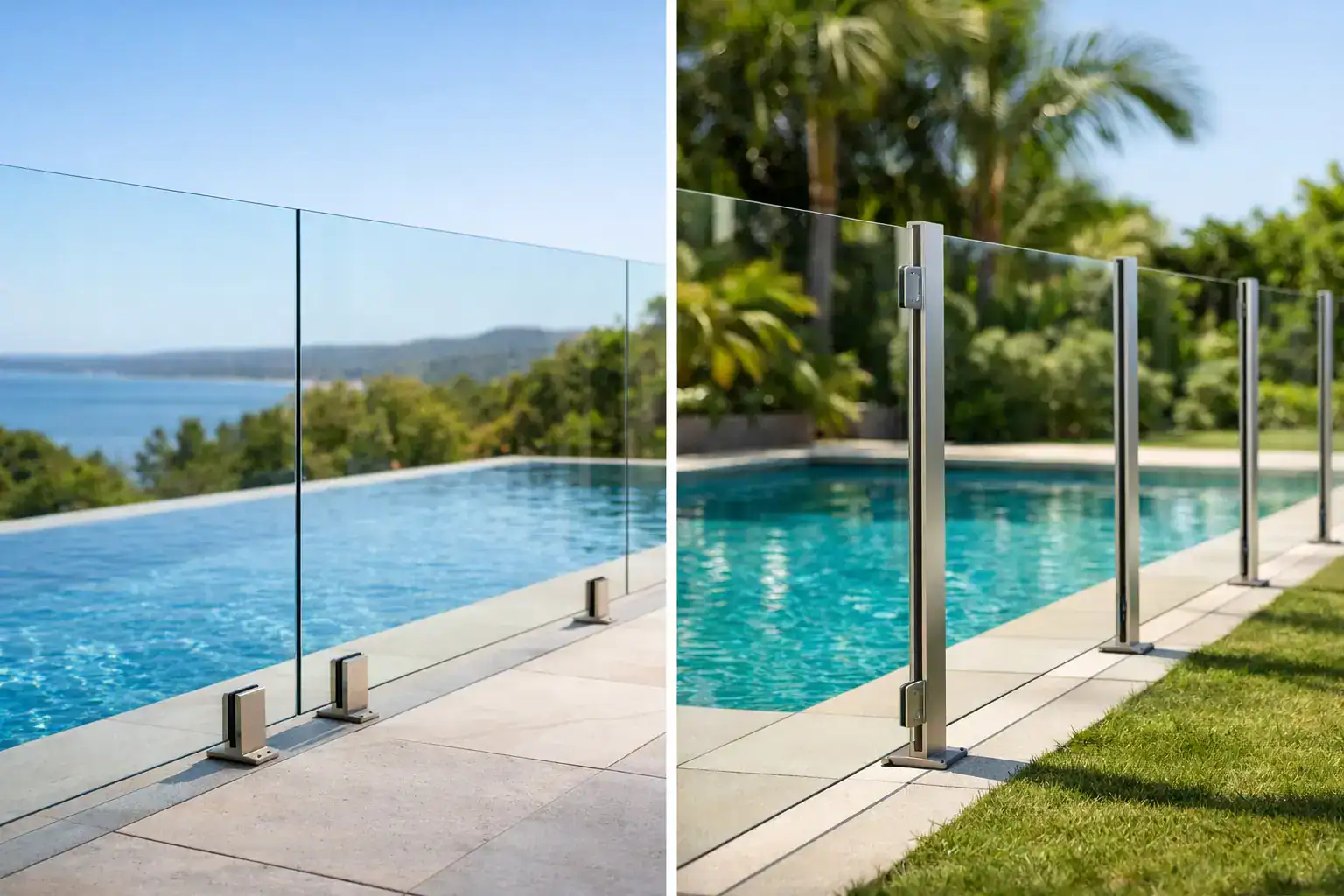
The main difference is in the structure. Frameless glass pool fencing uses thick toughened glass panels with minimal visible hardware. The panels are typically fixed with spigots or channels, so you get broad, uninterrupted views across the pool area.

Semi frameless glass pool fencing still uses glass panels, but each panel is supported by posts. Those posts are usually aluminium or another durable metal finish suited to outdoor conditions. You still get a modern look, but the framing is more visible and the lines are more defined.

For some Perth properties, that distinction is everything. If the goal is to make the pool area feel as open as possible, frameless usually has the edge. If the goal is to achieve a sharp glass finish while keeping costs more controlled, semi frameless is often the practical choice.

The look and feel around the pool

Frameless fencing is popular because it creates very little visual interruption. If you have invested in paving, landscaping, feature tiling or a pool with a strong architectural finish, frameless glass lets those details stay front and centre. It can also make smaller backyards feel larger because the eye moves through the space more freely.

Semi frameless fencing has a different visual character. The posts create rhythm and structure, which can actually suit many homes better than a fully frameless system. On properties with aluminium fencing, automatic gates or stronger exterior lines, semi frameless often ties in neatly with the rest of the design.

This is where the right choice depends on the home, not just the product. A sleek new build with a minimalist backyard may suit frameless beautifully. A family home that needs durability, value and a coordinated finish may be better served by semi frameless.

Cost considerations

For most property owners, budget is part of the decision from the start. Frameless pool fencing generally costs more than semi frameless. That comes down to thicker glass, specialised hardware and the precision needed in installation.

Semi frameless is usually more cost-effective while still giving you the benefits of glass. If you want a modern pool fence without pushing the project budget too far, it can be a very sensible option.

That said, the cheapest option is not always the best value. The right fence is the one that suits the site, meets compliance requirements and performs well over time. If a frameless system is better suited to the layout and delivers the finish you want, it may be worth the higher upfront investment. If semi frameless gives you the same practical result for less, that can be the smarter spend.

Installation and site conditions

Not every backyard is equally suited to every fence type. Site levels, pool surrounds, slab condition and access all play a part in what can be installed efficiently and correctly.

Frameless systems demand accuracy. Because there is less visible structure to absorb inconsistencies, installation needs to be precise. Glass alignment, hardware positioning and gate set-up all need to be spot on. On well-prepared sites, the result is excellent. On more complex sites, the installation can require additional planning.

Semi frameless can offer a little more flexibility, particularly where posts help manage layout transitions or support a more practical configuration. That does not mean it is a lesser product. It means the system can be better suited to certain site conditions and budgets.

Choosing from a brochure is one thing. Choosing based on the actual pool area, levels and access points is what leads to a better outcome.

Frameless vs semi frameless pool fencing for maintenance

Glass pool fencing is often chosen for its clean appearance, but all glass needs maintenance. Water spots, dust, salt in coastal areas and general outdoor grime will show up over time, especially in Perth conditions.

With frameless fencing, there are fewer visible structural elements, so the focus stays on keeping the glass clear. Many owners like the simplicity of that. Semi frameless fencing still needs the glass cleaned, but it also includes posts and fittings that should be checked and maintained as part of normal upkeep.

Neither option is high maintenance if quality materials are used and the fence is installed properly. The key is choosing hardware and finishes that are suited to local conditions. Coastal exposure, pool chemicals and daily sun can be tough on exterior products, so quality matters.

Safety and compliance are non-negotiable

Pool fencing is not only about appearance. It must comply with the relevant safety requirements, and that is where professional installation makes a real difference.

Both frameless and semi frameless pool fencing can be compliant when designed and installed correctly. Gates, latches, clearances, heights and surrounding elements all need to be considered. A stylish fence that does not meet compliance standards is not a good result.

This is often where property owners run into trouble when they focus only on product style. The fence has to work as a complete safety barrier. That includes how the gate closes, how the panels are positioned, and how the fence interacts with nearby structures or landscaping.

For homeowners, landlords and builders, you want a pool fence that looks premium, but you also want confidence that the installation has been handled properly from the start.

Which option suits Perth homes best?

There is no single answer, because Perth properties vary so much in layout, style and exposure. In suburbs with modern homes and landscaped entertaining areas, frameless fencing is often chosen for its premium finish and open feel. It works especially well where the pool is a design feature and the view across the backyard is worth preserving.

Semi frameless is a strong choice for many family homes, investment properties and practical upgrades. It still looks polished and modern, but it can offer better value and a more structured finish. For some clients, that balance is exactly what they need.

Commercial and multi-residential settings can also lean either way depending on the brief. Some projects prioritize presentation and visual openness. Others need a durable, cost-conscious specification that still delivers a professional result.

Questions worth asking before you decide

Before choosing between frameless and semi frameless, it helps to be clear on what you want for your property. Are you aiming for the most open look possible, or are you after a strong result within a defined budget? Is the pool area a showpiece, or is it part of a broader upgrade where every dollar needs to work hard?

It is also worth thinking about who uses the space. A home built around entertaining may justify a more premium finish. A rental or practical family property may call for a solution that balances style, compliance and cost more tightly.

Good advice should account for all of that. At Topline Fencing, that means looking at the site, understanding the priorities and recommending a system that fits the property rather than pushing a one-size-fits-all answer.

Making the right call

If your priority is a high-end, barely-there look with maximum visibility, frameless pool fencing is hard to beat. If you want a modern glass fence that delivers strong visual appeal with a more budget-friendly structure, semi frameless is often the better fit. In our experience most people go for frameless.

Both options can add value to a property when they are installed well and matched to the space. The best result usually comes from balancing style with compliance, local conditions and long-term practicality.

A pool fence should feel like part of the property, not an afterthought. Call Topline today and we can manage the design, materials and installation properly so you end up with a safer pool area that also looks right every time you step outside.

How to Plan Pool Fencing Properly

A pool fence can look straightforward on paper, then become complicated the moment you factor in gates, falls, paving levels and pool safety rules. If you are working out how to plan pool fencing, the best approach is to get clear on compliance first, then build the design around how the space actually gets used.

A fence that looks clean and minimal still needs to perform every day, hold up in local conditions and meet the legal requirements for a compliant pool barrier. Good planning saves money, avoids rework and gives you a safer result that suits the home rather than feeling like an afterthought.

How to plan pool fencing from the start

The first decision is not the material. It is the boundary of the pool barrier itself.

Some homeowners assume the fence should sit as close to the water as possible. Others want to push it out wider to create a more usable pool zone with room for seating, storage or circulation. Both approaches can work, but they create very different outcomes. A tighter fence line can reduce cost and keep the area compact. A wider layout often feels better to live with, especially if the pool is part of a larger entertaining space.

This is where site conditions matter. Existing retaining, garden beds, alfresco posts, steps and drainage points can all affect the most practical fence position. On sloping blocks, seemingly minor changes in level can also create compliance issues if they are not accounted for properly. Planning the fence line early helps prevent awkward panel sizes, hard-to-reach gate positions and expensive changes once installation is underway.

It is also worth thinking about sightlines. Many Perth homeowners want a pool fence that protects the area without making the backyard feel closed off. That usually means balancing safety with visual openness. Glass can preserve views and keep the space feeling open, while aluminium tubular fencing can provide a neat, compliant barrier with a more defined frame. The right option depends on the property, the budget and how prominent the pool area is within the overall landscape.

Start with compliance, not just appearance

Pool fencing is one of those jobs where looks alone are not enough. If the barrier does not meet the applicable requirements, it does not matter how good it appears.

That is why planning should begin with the fundamentals of pool safety compliance. Gate swing direction, latch height, clearances beneath panels, climbable objects near the fence and the relationship between nearby structures all need to be considered before the design is finalised. A beautifully finished fence can still fail if a boundary condition or access point has been overlooked.

This is also where DIY planning can come unstuck. Many owners focus on panel style and gate location but miss the details that affect certification and ongoing safety. Pot plants, outdoor furniture, pump equipment housing and nearby walls can all influence whether the barrier remains compliant in practical use, not just on installation day.

For that reason, professional site inspection and measurement are not just a convenience. They are part of getting the job right. A fence needs to suit the property as built, not just the concept in your head.

Choosing the right pool fencing material

When clients ask how to plan pool fencing, the material conversation usually comes next. The best choice depends on what you want the fence to do visually, how much maintenance you are comfortable with and where the strongest pressure points are on site.

Glass pool fencing

Frameless and semi-frameless glass remain popular for a reason. They create a premium finish, maintain open sightlines and work particularly well where the pool is a key feature of the outdoor area. If you have invested in paving, landscaping or a strong architectural design, glass usually lets those elements speak for themselves.

The trade-off is that glass tends to sit at a higher price point, and it shows dirt, water spots and fingerprints more readily than aluminium options. That does not make it high maintenance, but it does mean owners should expect occasional cleaning if they want it looking sharp.

Aluminium tubular fencing

Aluminium tubular fencing is a practical and dependable choice for many Perth properties. It is durable, compliant, cost-effective and well suited to homes where function, safety and low upkeep are the priorities. It also works well where the pool fence needs to tie in with other fencing or gate elements on the property.

Visually, it has a more defined presence than glass. Some owners prefer that. Others want the lighter look of transparent panels. Neither is right or wrong. It comes down to the character of the home and how open you want the area to feel.

Plan access as carefully as the fence itself

The gate is often the most used part of the entire pool barrier, yet it is one of the areas most commonly underplanned.

A gate should be placed where access feels natural, not forced. If people regularly cut across the yard from the alfresco, rear door or side path, the gate needs to support that movement. Poorly placed access leads to frustration in daily use and can encourage owners to prop gates or work around the intended circulation, which is exactly what a safe pool barrier should avoid.

Self-closing and self-latching performance is essential, but so is reliability over time. The gate should shut consistently, align properly and cope with regular use without becoming difficult or temperamental. That is where installation quality makes a real difference.

If the pool area connects to an entertaining space, think through furniture layout as well. A gate that opens into a cramped corner or collides with outdoor settings is not good planning, even if it meets the basic technical rules.

Work with the block, not against it

Perth properties vary widely. Some blocks are level and straightforward. Others include split levels, retaining walls, narrow side access or older outdoor areas that were never designed with a compliant pool fence in mind.

That is why custom measurement is so important. Off-the-shelf assumptions rarely suit every site condition. Even a small difference in ground level can affect panel spacing and the finished look of the fence line. If the layout is forced to fit a standard approach, the result can look uneven or require compromises that were avoidable from the outset.

A well-planned pool fence should feel integrated with the home. It should follow the logic of the site, sit neatly with paving and landscaping, and provide clear access without cluttering the yard. That level of finish does not happen by accident. It comes from detailed planning and precise installation.

Budget for the full job, not just the panels

A realistic budget needs to account for more than the fence material alone. Gates, hardware, custom angles, site preparation, changes in level and installation complexity all influence the final cost.

Glass fencing, for example, may involve more premium hardware and a different installation approach than aluminium tubular fencing. Likewise, a simple rectangular layout is usually more efficient than a fence line that steps around multiple obstacles or ties into existing structures.

It is also worth thinking long term. A cheaper option upfront is not always better value if it does not suit the space, needs early replacement or creates constant maintenance frustrations. Pool fencing is a safety product, but it is also a permanent part of your exterior presentation. It should perform well and look right for years, not just pass inspection on day one.

Why professional installation makes planning easier

A qualified fencing contractor like Topline can identify layout issues early, recommend suitable materials for the property and make sure the design works in practice as well as on paper. We are experienced in measurements, custom fabrication, gate placement and compliance details through one experienced team that reduces the risk of mismatched expectations and avoidable setbacks.

Materials need to stand up to harsh sun, coastal conditions in some suburbs and the wear that comes with regular outdoor use. A fence might meet the brief initially, but long-term performance depends on product quality and workmanship. At Topline Fencing, we give you a clearer path from concept to installation, with a fence that is built for safety, appearance and lasting value.

If you are planning a new pool fence or replacing an outdated barrier, take the time to get the layout right or give Topline a call and we can handle it for you. The best result is not the one that looks good in a photo. It is the one that suits your property, complies properly and lasts for years to come.